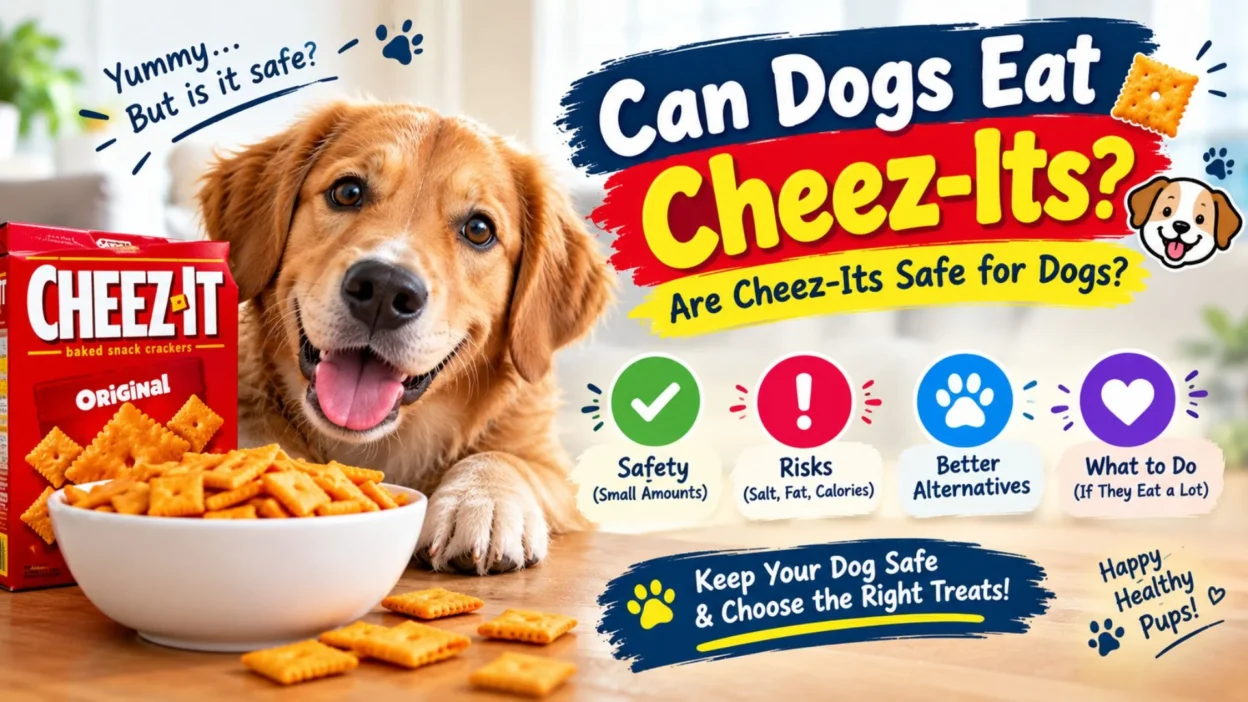
If your dog grabs a Cheez-It from the floor, you may immediately wonder, “Can dogs eat Cheez-Its?” The good news is that eating a small amount of a regular Cheez-It is generally unlikely to cause serious problems for most healthy dogs. However, Cheez-Its are not a healthy or recommended treat for dogs.
Cheez-Its are processed human snacks that contain ingredients such as cheese, flour, fat, and salt. Dogs have different nutritional needs from humans, so regularly sharing salty, processed snacks can contribute to digestive problems and an unbalanced diet.
Can Dogs Eat Cheez-Its? 🐕🧀
Yes, dogs can usually eat a small amount of a regular Cheez-It without experiencing serious problems. However, that does not mean Cheez-Its should become a regular part of a dog’s diet.
A single Cheez-It or a tiny piece is generally much less concerning than a large quantity. The main issue is that these crackers provide little nutritional value for dogs while adding calories, salt, and fat.
• A small accidental piece is usually not a major concern.
• Cheez-Its should not replace balanced dog treats.
• Large amounts may cause stomach upset.
• Dogs with certain health conditions may need to avoid salty snacks completely.
• Puppies can also have more sensitive digestive systems.
• Different Cheez-It varieties may contain different ingredients.
• Always check the ingredient label if your dog eats a flavored variety.
Are Cheez-Its Toxic to Dogs? ⚠️
Regular Cheez-Its are not generally considered a toxic food for dogs when eaten in a small quantity. However, individual varieties can contain additional seasonings or ingredients that may not be appropriate for dogs.
The amount your dog consumed also matters. Eating one cracker is very different from eating a whole box.
If your dog has eaten a large amount, monitor them for signs of digestive discomfort and contact a veterinarian if you are concerned.
• One small cracker is usually less concerning than a large serving.
• Excessive salt can be harmful to dogs.
• High-fat foods may cause digestive problems.
• Some flavored snacks contain additional seasonings.
• Ingredients can change between products and varieties.
• Dogs with existing health problems may be more sensitive.
• When in doubt, check the packaging and contact your veterinarian.
Why Aren’t Cheez-Its a Good Dog Treat? 🧀
Cheez-Its are designed as a human snack rather than a canine treat. They are tasty because they contain ingredients that appeal to people, but dogs do not need these ingredients in their daily diet.
A balanced dog food already provides the nutrients your dog needs. Adding processed snacks can provide unnecessary calories without offering much nutritional benefit.
• They can contain a significant amount of sodium.
• They provide calories without being nutritionally complete.
• They are processed rather than formulated as dog treats.
• Some varieties contain extra seasonings.
• Eating too many may upset your dog’s stomach.
• Frequent treats can contribute to excess calorie intake.
• Healthier dog-safe treats are available.
What Happens If a Dog Eats One Cheez-It? 🐾
If your dog eats one regular Cheez-It, there is usually no reason to panic. Most healthy dogs can tolerate a small amount of this type of snack.
Your dog may simply continue with their normal activities. You can provide access to fresh water and keep an eye on them for any unusual digestive symptoms.
• Your dog may show no reaction at all.
• They may simply want another cracker because they enjoyed the taste.
• A sensitive dog could experience mild stomach upset.
• Keep fresh drinking water available.
• Avoid giving additional human snacks.
• Return to your dog’s normal diet.
• Contact your veterinarian if concerning symptoms develop.
What If a Dog Eats a Lot of Cheez-Its? 🚨
Eating a large amount is more concerning than eating one or two crackers. A big serving can provide a considerable amount of salt, fat, and calories.
If your dog has eaten a large quantity, especially from an entire box or package, consider contacting your veterinarian for advice. The veterinarian can consider your dog’s size, age, health history, the amount eaten, and the exact product.
• Keep the package so you can check the ingredients.
• Estimate how much your dog consumed.
• Consider your dog’s approximate size.
• Watch for vomiting or diarrhea.
• Monitor for unusual thirst or other changes.
• Do not intentionally make your dog vomit unless a veterinarian tells you to.
• Seek veterinary guidance when a large quantity has been consumed.
Can Puppies Eat Cheez-Its? 🐶
Puppies should generally not be given Cheez-Its as treats. Growing puppies need food that is specifically formulated to support healthy development.
A tiny accidental piece is unlikely to cause a serious problem in most cases, but deliberately feeding processed human snacks is unnecessary.
• Puppies need nutritionally appropriate puppy food.
• Their digestive systems can be sensitive.
• Extra salty foods are not a good choice.
• Small puppies can consume a higher proportion relative to their body size.
• Training treats made for dogs are a better option.
• Ask your veterinarian about suitable treats for your puppy.
Can Dogs Eat Cheez-It Grooves or Other Varieties? 🧀
Different Cheez-It products can have different ingredients and seasonings. Therefore, you should not assume that every variety has exactly the same nutritional profile.
Plain or original-style crackers may be different from products containing additional flavors or seasonings.
• Check the package before sharing any variety.
• Look for added seasonings.
• Avoid intentionally feeding large quantities.
• Be particularly careful with strongly flavored products.
• Remember that “cheese-flavored” does not mean nutritionally appropriate for dogs.
• When ingredients are unfamiliar, ask a veterinarian.
Can Dogs Eat Cheez-Its With Garlic or Onion Seasoning? 🧄🧅
Some flavored human snacks may contain ingredients such as onion or garlic seasoning. These ingredients can be harmful to dogs, particularly when consumed in sufficient amounts.
Because recipes vary, check the exact ingredient list of the product your dog ate. If the snack contains potentially harmful ingredients and your dog consumed a significant amount, contact a veterinarian promptly for guidance.
• Check the ingredient label.
• Look for onion or garlic ingredients.
• Do not assume all flavors have identical ingredients.
• Consider the quantity your dog consumed.
• Keep the packaging available for reference.
• Contact a veterinarian if you are unsure about a potentially harmful ingredient.
Can Dogs Eat Cheez-Its Every Day? ❌
Cheez-Its should not be a daily treat for dogs. Even if a dog tolerates them without an obvious reaction, regularly feeding processed snacks can add unnecessary salt, fat, and calories.
Instead, choose treats specifically made for dogs or small portions of appropriate dog-safe foods.
• Avoid making Cheez-Its part of your dog’s daily routine.
• Use dog treats during training.
• Keep treats appropriate to your dog’s size.
• Account for treats within your dog’s overall calorie intake.
• Choose nutritionally appropriate options.
• Keep human snack foods occasional and out of reach.
Healthier Alternatives to Cheez-Its for Dogs 🥕🍎
If your dog loves crunchy treats, there are several options that can be more appropriate than processed crackers. Commercial dog treats are available in many forms, and some plain foods can also work for dogs when they are safe and prepared appropriately.
Suitable options depend on your individual dog’s health and dietary needs.
• Dog biscuits made specifically for dogs
• Small pieces of plain cooked chicken
• Carrot pieces prepared appropriately
• Cucumber pieces
• Plain pumpkin in an appropriate form
• Veterinary-approved training treats
• Commercial treats designed for your dog’s size
Always introduce new foods gradually and avoid foods known to be unsafe for dogs.
Why Do Dogs Love Cheez-Its? 🐕❤️
Dogs often find human snacks appealing because of their smell, texture, and strong flavors. Cheez-Its have a crunchy texture and cheesy flavor that can make them particularly interesting to curious dogs.
Your dog may also want a snack simply because they see you eating it.
• The smell can attract curious dogs.
• Crunchy textures can be interesting.
• Dogs often investigate foods their owners are eating.
• Cheesy flavors can be appealing.
• Getting food from a person can reinforce begging behavior.
• A dog may continue asking for something that was previously rewarded.
Should You Give Your Dog Cheese Instead? 🧀🐶
Cheese itself can sometimes be given to dogs in small amounts, depending on the individual dog. However, some dogs have difficulty digesting dairy products, and cheese can also be relatively high in fat and calories.
Therefore, cheese is not automatically a better everyday treat.
• Start with a very small amount if your veterinarian says it is appropriate.
• Watch for digestive upset.
• Avoid heavily seasoned cheese.
• Avoid products containing unsafe ingredients.
• Consider lower-fat options when appropriate.
• Treat cheese as an occasional snack rather than a dietary staple.
Signs Your Dog May Have an Upset Stomach 🐾
After eating an unusual human snack, some dogs may develop digestive symptoms. Mild symptoms can sometimes resolve on their own, but persistent or severe symptoms deserve veterinary attention.
Watch your dog for changes such as:
• Vomiting
• Diarrhea
• Loss of appetite
• Excessive thirst
• Abdominal discomfort
• Unusual tiredness
• Changes in normal behavior
If your dog appears seriously unwell, has severe symptoms, or you believe they consumed a large amount of an unsuitable ingredient, contact a veterinarian promptly.
What Should You Do If Your Dog Eats Cheez-Its? 🐶
The appropriate response depends on how many were eaten, what variety they were, and your dog’s size and health.
For a small accidental amount of a regular product, simply monitoring your dog is often reasonable. However, larger amounts or questionable ingredients warrant additional caution.
• Remove the remaining crackers.
• Check the product’s ingredient list.
• Estimate how many crackers were eaten.
• Make sure your dog has access to fresh water.
• Observe your dog for unusual symptoms.
• Avoid giving more human snacks.
• Contact your veterinarian if you are worried.
Cheez-Its and Dogs: Small Amount vs. Large Amount
The quantity makes an important difference. A single cracker and a large serving should not be treated as the same situation.
| Amount | General concern |
|---|---|
| One small cracker | Usually low concern for a healthy dog |
| A few crackers | Monitor for digestive upset |
| A large handful | Greater concern because of salt, fat, and calories |
| A large portion or box | Contact a veterinarian for guidance |
| Flavored variety with questionable ingredients | Check the label and seek veterinary advice if a significant amount was eaten |
This table is general information rather than a diagnosis. Your veterinarian can provide advice based on your dog’s individual circumstances.
How to Keep Human Snacks Away From Dogs 🏠
Dogs are naturally curious, and an open box of crackers can be an easy target. Keeping snacks stored securely can prevent accidental overeating.
• Store snacks in closed cabinets.
• Do not leave open packages on low tables.
• Teach children not to feed dogs human snacks without permission.
• Keep food wrappers away from pets.
• Put leftovers away after eating.
• Use dog-safe treats when rewarding your pet.
Frequently Asked Questions About Dogs and Cheez-Its ❓🐶
Can dogs eat one Cheez-It?
A single regular Cheez-It is generally unlikely to cause serious problems in a healthy dog. However, it is better to choose a dog-specific treat instead.
Can Cheez-Its make dogs sick?
Eating too many can potentially cause digestive upset because these crackers contain ingredients such as salt and fat that dogs do not need in large quantities.
Are Cheez-Its toxic to dogs?
Regular Cheez-Its are not generally considered toxic when a dog eats a small amount. However, certain flavored varieties may contain additional ingredients that require more caution.
Can puppies eat Cheez-Its?
Puppies should not be routinely fed Cheez-Its. They need nutritionally balanced puppy food and appropriate treats for their stage of development.
What should I do if my dog ate a whole box?
If your dog ate a large amount, contact a veterinarian for advice. Keep the package available so you can provide the exact product and ingredient information.
Can dogs eat cheese crackers?
A small accidental amount of a plain cheese cracker is generally unlikely to cause serious problems for a healthy dog. However, cheese crackers are not an ideal regular dog treat.
Can dogs eat flavored Cheez-Its?
Check the exact ingredient list first. Flavored products can contain additional seasonings, so they should not automatically be treated the same as the original variety.
Are Cheez-Its healthy for dogs?
No. Cheez-Its are designed as a human snack and are not nutritionally necessary for dogs. Dog-specific treats are generally a more appropriate choice.
Final Thoughts 🐾
So, can dogs eat Cheez-Its? A healthy dog that accidentally eats one or a few regular Cheez-Its will usually be fine, but these crackers are not a recommended everyday treat. They contain salt, fat, and calories without providing the balanced nutrition dogs need.
If your dog eats a large quantity, consumes a flavored variety with potentially problematic ingredients, or develops concerning symptoms, contact your veterinarian. For regular rewards, choose treats made specifically for dogs and keep human snack foods occasional.

Mia Reynolds is a creative humor writer and content creator who loves exploring clever jokes, funny puns, and playful word ideas. She enjoys creating entertaining content that brings laughter, positivity, and smiles to readers around the world.