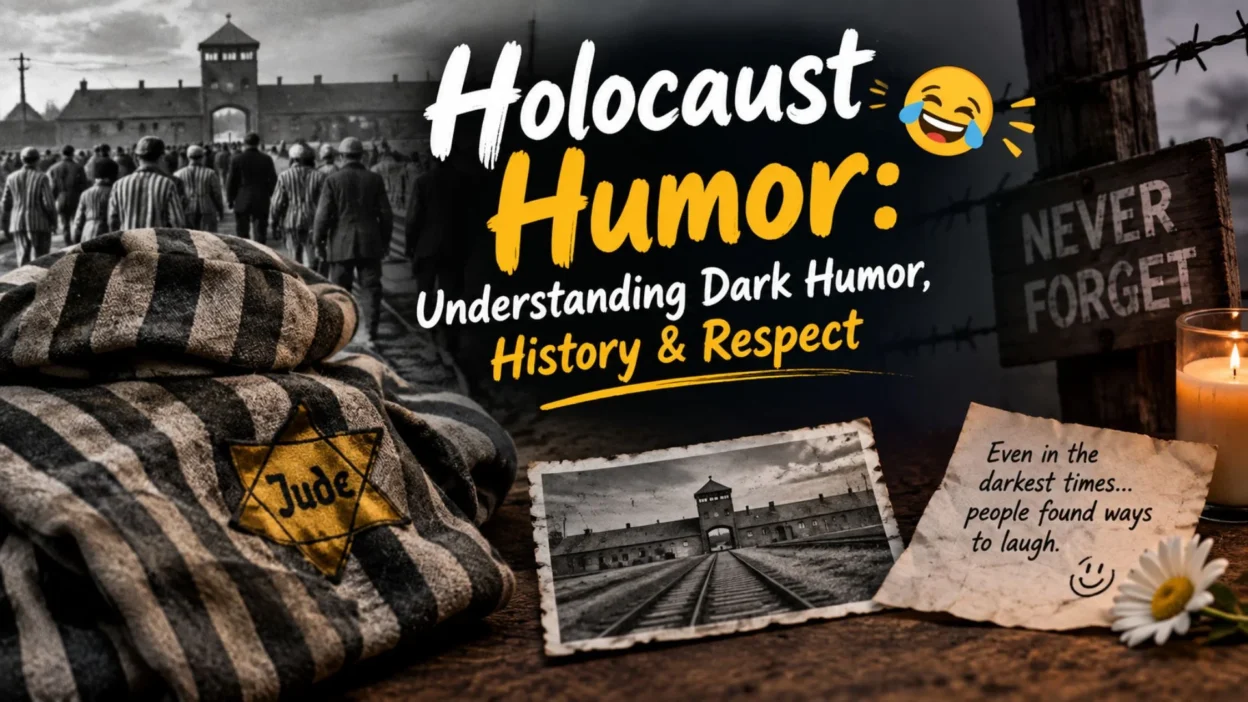
Holocaust jokes The Holocaust was one of the darkest periods in modern history, during which Nazi Germany and its collaborators systematically persecuted and murdered approximately six million Jews, along with millions of other victims. Because of the enormous human suffering involved, discussions about humor surrounding the Holocaust require particular care and historical awareness.
Dark humor can sometimes emerge around traumatic events. People may use humor as a coping mechanism, a way to process fear, or a means of confronting painful subjects. However, there is an important difference between discussing the role of humor in difficult circumstances and making jokes that mock victims, glorify perpetrators, or minimize the reality of genocide.
Understanding that distinction is especially important when discussing the Holocaust. Humor can become harmful when it removes the humanity from victims or treats historical suffering as entertainment.
📚 What Was the Holocaust?
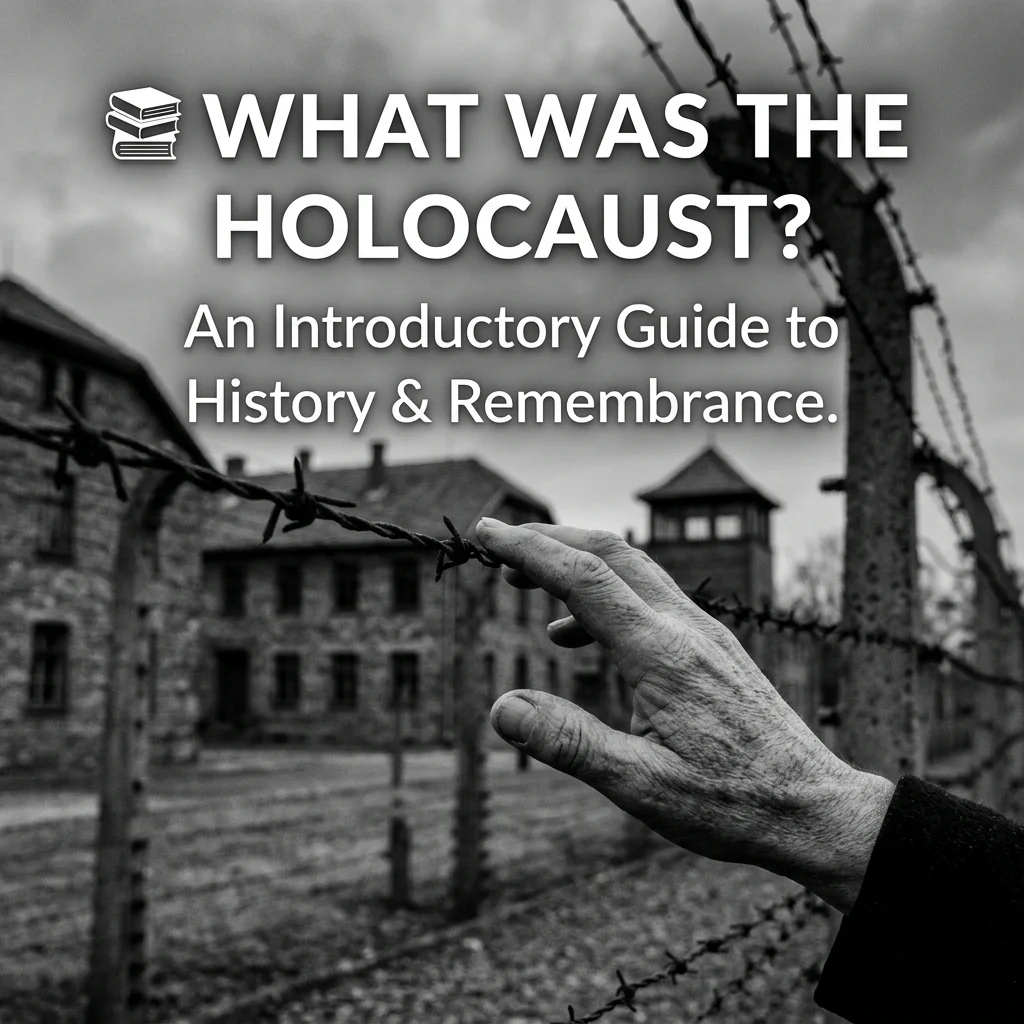
The Holocaust was the systematic persecution and murder of European Jews by Nazi Germany and its allies and collaborators between 1933 and 1945.
Nazi persecution developed over time. Jews were progressively excluded from German society through discriminatory laws, stripped of rights, forced into ghettos, deported, and eventually subjected to mass murder.
Other groups were also persecuted and murdered by the Nazi regime, including Roma and Sinti people, people with disabilities, Soviet prisoners of war, Polish civilians, political opponents, and others.
Studying this history helps explain why the Holocaust remains such an important subject in education today.
🕯️ Why Holocaust Humor Is Sensitive
Humor normally depends on exaggeration, surprise, or an unexpected punchline. When the subject involves mass murder and genocide, however, the same techniques can unintentionally minimize real suffering.
For survivors and descendants of victims, references to the Holocaust may be connected to family histories, trauma, displacement, and loss.
A joke that appears harmless to one person may therefore have a very different meaning to someone whose family was directly affected.
Context matters greatly when discussing difficult historical events.
🧠 Can Humor Be Used to Cope With Trauma?
Humor has sometimes been used by people experiencing extreme circumstances as a psychological coping mechanism.
Historical accounts from wartime and concentration camps contain examples of prisoners using humor, irony, songs, stories, and other forms of cultural expression despite horrific conditions.
This does not mean that the Holocaust itself was humorous. Instead, such examples demonstrate the resilience and humanity of people living under extraordinary circumstances.
The distinction is important: humor used by people experiencing oppression is different from humor that ridicules those people afterward.
🎭 The Difference Between Dark Humor and Mockery
Dark humor can address frightening or tragic subjects without necessarily attacking the people who suffered.
For example, a work of art might explore how people use irony to survive difficult circumstances. A documentary might examine jokes told during wartime and ask what those jokes reveal about human resilience.
Mockery is different when it targets victims, celebrates their suffering, denies what happened, or presents perpetrators as admirable.
Understanding the target and purpose of the humor can help distinguish historical analysis from harmful trivialization.
🕊️ Remembering Holocaust Victims
The Holocaust involved millions of individual human beings, each with families, friendships, hopes, interests, and personal stories.
Remembering those individuals prevents the Holocaust from becoming merely a statistic.
Names, photographs, diaries, letters, survivor testimonies, and historical documents provide important ways to understand the people behind the numbers.
One of the most famous examples is the diary of Anne Frank, whose writing provides a deeply personal perspective on persecution and hiding during the Holocaust.
📖 Why Holocaust Education Matters
Holocaust education teaches more than dates and historical events. It can help students understand how discrimination, propaganda, dehumanization, authoritarianism, and antisemitism can develop within societies.
Learning about the Holocaust also encourages critical thinking about historical evidence.
Students can examine primary sources, compare eyewitness accounts, study photographs and documents, and consider how historians reconstruct events from surviving evidence.
This approach helps preserve historical memory while encouraging responsible discussion.
🌍 The Importance of Historical Accuracy
The Holocaust is extensively documented through Nazi records, photographs, survivor testimony, military records, diaries, correspondence, demographic research, and postwar investigations.
Historical accuracy is important because misinformation can distort the scale and nature of what happened.
When discussing the Holocaust online, readers should distinguish between documented evidence, personal interpretation, fictional representations, and unsupported claims.
Reliable historical sources and survivor testimony provide a stronger foundation than memes or social-media posts.
💬 Discussing Difficult Subjects Responsibly
People can discuss difficult historical subjects without avoiding uncomfortable questions.
A respectful discussion might examine:
- Why do societies create dark humor?
- How did prisoners use humor as a coping mechanism?
- How can comedy address traumatic historical events?
- When does dark humor become dehumanizing?
- Why do survivors and descendants respond differently to Holocaust references?
- How should historical tragedies be represented in entertainment?
These questions can lead to meaningful conversations without turning victims’ suffering into the punchline.
🎬 Holocaust Representation in Popular Culture
Films, novels, documentaries, theater, and other creative works have explored the Holocaust in many different ways.
Some works focus on individual experiences, while others examine resistance, survival, memory, or the aftermath of genocide.
Creative representation can help audiences understand history emotionally, but it also carries responsibility. Fictional storytelling should not be mistaken for historical documentation.
Creators who address the Holocaust must consider how their work represents victims, survivors, perpetrators, and historical events.
🧩 Why Context Matters Online
Internet culture often removes context from historical subjects.
A meme may circulate without explaining when it was created, who created it, or what its intended meaning was. A short joke can therefore be interpreted very differently by different audiences.
Historical subjects deserve more context than a single image or punchline can usually provide.
Before sharing Holocaust-related content, readers can ask whether it informs, challenges, or simply trivializes the subject.
🕯️ Remembering Rather Than Trivializing
The Holocaust remains a subject that deserves serious historical attention because its consequences extended across families, communities, and generations.
Humor can be studied as part of human behavior during traumatic periods, but that discussion should not erase the suffering experienced by victims.
Learning individual stories, examining historical evidence, and listening to survivors can provide a deeper understanding than jokes ever could.
Remembering history does not require avoiding difficult conversations. It requires approaching those conversations with accuracy, empathy, and respect.
❓ Frequently Asked Questions
What was the Holocaust?
The Holocaust was the systematic persecution and murder of approximately six million Jews by Nazi Germany and its collaborators during the period leading up to and including World War II.
Why is Holocaust humor controversial?
The Holocaust involved genocide and mass suffering. Humor can become harmful when it mocks victims, glorifies perpetrators, denies historical events, or trivializes the scale of the atrocities.
Can humor be studied in Holocaust history?
Yes. Historians can examine humor, satire, songs, and other forms of expression as evidence of how people responded to persecution and extreme circumstances.
Is dark humor always offensive?
Not necessarily. Context, intent, audience, and the target of the humor all matter. However, jokes involving genocide require particular care because they can easily minimize or ridicule real suffering.
Why is Holocaust education important?
Holocaust education helps people understand antisemitism, discrimination, propaganda, persecution, genocide, and the consequences of dehumanizing groups of people.
🕊️ Conclusion
The Holocaust is an essential subject of historical study and remembrance. While humor can sometimes help people cope with traumatic experiences, jokes about genocide can also trivialize suffering when they target victims or treat mass murder as entertainment.
A thoughtful discussion of Holocaust-related humor should therefore focus on context, history, human resilience, and the experiences of those who lived through the Holocaust.
Remembering individual victims, studying reliable historical evidence, and listening to survivor testimony can help future generations understand what happened and why historical memory matters.
The goal of discussing difficult history should ultimately be understanding—not forgetting, minimizing, or turning suffering into a punchline.

Mia Reynolds is a creative humor writer and content creator who loves exploring clever jokes, funny puns, and playful word ideas. She enjoys creating entertaining content that brings laughter, positivity, and smiles to readers around the world.